It’s quite fascinating to see the impact of the brand in an industry that is fa from the FMCG or retail, but still…
Born from a European project to take control of the destiny of its aerospace industry, it was in the 1970s that the first Airbus (A300) took flight, and nothing could have predicted the enormous success that this company, supported by EADS established as Airbus’s parent company in 2000, would experience

I’ll start at the end. Indeed, the first element of Brand Portfolio’s management effectiveness is quite atypical. On January 2, 2014, EADS changed its name to Airbus Group, and Airbus Defence and Space was created from former divisions. Airbus Group then merged with Airbus SAS in 2017 to become Airbus.
Indeed, it is impressive to see that the success, popularity, and reputation of Airbus, the subsidiary with Airbus aircraft, ultimately led EADS ( the endorser) – European Aeronautic Defence and Space Company to change its name. This rebranding even led to the adoption of the Airbus brand descriptor to name the other subsidiaries, the most important of which are:
- Airbus Commercial Aircraft
- Airbus Defence and Space
- Airbus Helicopters
Others: Airbus Corporate Jets, Airbus Atlantic

The branch of the portfolio that constitutes two-thirds of the revenues has therefore influenced the rest of the portfolio and even absorbed them. This is not an isolated example, when we see how the rare case where the Airbus product portfolio was expanded by the acquisition On October 16, 2017 of a majority of the shares of the Canadian Bombardier C-Series, mainly carried by the CS100 and CS300 models, which upon their acquisition were integrated into the Airbus product portfolio and renamed: A220-100 and A220-300.
This management therefore involves constant monitoring of the corporate image and strengthening of the brand, but the same effort is made in the product area with just as much consistency.
Driven by its technological performance and commercial successes, but also by the decline experienced by Boeing, Airbus’s reputation is excellent, reassuring not only users, but also passengers.
Who produces the best aircraft?
Who produces the most reliable aircraft?
Who produces the most modern aircraft?
Who produces the most environmentally friendly aircraft?
Which aircraft have the best-equipped and most pleasant cabins?
The list goes on, given that Airbus has the wind in its sails and excellent goodwill, reflecting European trends. Increasingly, it seems that passengers are choosing their flight and itinerary based on the equipment available to them.
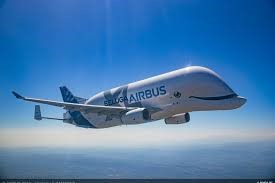
Airbus is a symbol of innovation and reliability, with a constant concern to seek the best for all users. This breaks with capitalist reality and it is an image that must be preserved by the company, also considering the upcoming challenges, individual aircraft for urban travel and other things.This strength that becomes a competitive advantage comes from their investment in RnD , and also this habit to communicate the progress to the entire world. This is what needs to be pushed in a continuous way.